England breaks away from a great pan-European union, criticising it for being out of touch and corrupt. The break causes division across the land, with the north set against the south, London against the rest. Families, too, are divided, leading to bitter arguments between parents, children and siblings. Friends fall out with each other, and become bitter enemies. But the ruler is intent on making the break happen, regardless of opposition. Many look forward to a future where England stands alone, recreating past glories, carving its own way across the world. Others, though, long to remain in union with their continental cousins, as part of a broader international community. Meanwhile, Nigel Farage –
What?
No, wrong B-word.
I’m talking, of course, about Henry VIII’s break with the Catholic church, one of the important contexts underpinning my new novel, Destiny’s Tide. This is actually one of many aspects of the story (and, indeed, the bigger stories running across all three books in the trilogy) where I’m deliberately flying in the face of widely-held popular beliefs – or, as I prefer to call them, misconceptions and downright myths. For example, it’s often assumed that Henry VIII broke away from papal supremacy and the Catholic church in 1534, and that England then immediately became a Protestant country. Forgive the detour into panto season, but ‘oh no it didn’t’. Henry himself remained a religious conservative all his life, and once burned both Catholics and Protestants on the same day. True, there was an ongoing struggle in the last years of his reign between conservatives, led by the likes of the Duke of Norfolk and Bishop Stephen Gardiner, and reformers, led by the likes of Archbishop Cranmer and Henry’s last queen, Catherine Parr. (Thomas Cromwell, of Wolf Hall fame, was dead long before the main action in Destiny’s Tide begins.) But in many key respects, England remained a Catholic country until after Henry’s death, albeit with the king as head of the church instead of the pope.
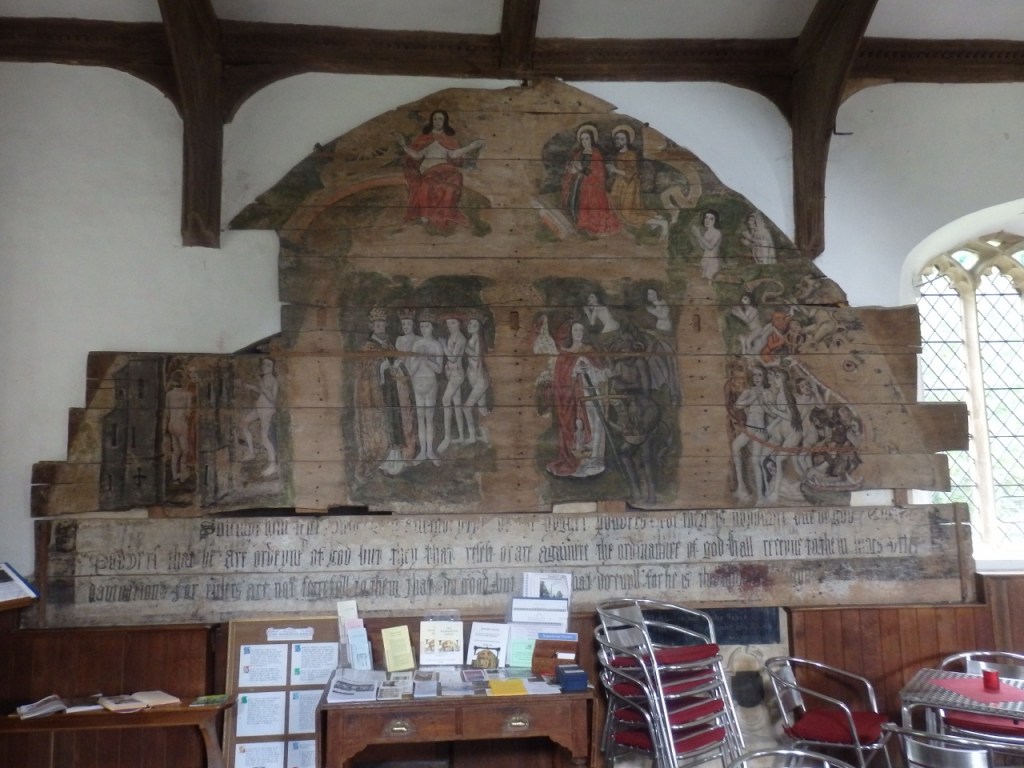
All of these themes are referenced in my story. Above all, I try to imagine how one family, the Stannards of Dunwich, might have reacted to the sometimes bewildering pace and nature of religious change. For example, while services continued to be held in Latin, many aspects of belief were under threat from those who wanted England to become a truly Protestant country. The Catholic concept of Purgatory, a kind of staging post between earthly life and heaven or hell, was being challenged, while familiar, much-loved elements contained within every church were being torn down and destroyed. At the time when Destiny’s Tide is set, the principal battle was over rood screens, brightly decorated wooden structures which physically separated the clergy from their congregation, and the doom paintings which adorned them; indeed, one particular doom painting plays a significant part in the story. Now, I know that these are unfamiliar terms to many people, especially if you’re not one of those strange creatures who likes to spend even bright sunny afternoons wandering around old churches (guilty as charged) or if you live in a country which simply doesn’t have old churches.
(Sorry, good people of the United States, but this is one of those occasions when your definition of ‘old’ parts company with we Brits’ definition of ‘old’. Example: the church in my village predates Columbus, and the pub next door to it predates Jamestown. Both are still in regular use, not museums.)
So here, then, are some pictures to help give an idea of what the Stannards might have seen in their church in Dunwich, and the controversial features that they might have wanted to preserve.